Different buyers use the same pencil, marker, or color tool in different ways. This page keeps those environments separate so quotes, packs, and documentation can be built with fewer assumptions.
Education buyers need repeatable kits, clear age-appropriate product positioning, and documented product substitutions when budgets or term dates change. Staedtler programs can separate classroom pencils, geometry sets, color pencils, markers, erasers, and teacher presentation tools into grade-level or department-level order groups.
Creative teams care about consistent line quality, color range, surface compatibility, and refills or replacement accessories. We keep mechanical pencils, graphite ranges, pigment liners, rulers, erasers, and art materials organized by task rather than by vague catalog family.
Office managers need writing products that are easy to replenish and presentation tools that match meeting-room habits. Programs can include pens, permanent markers, whiteboard markers, highlighters, and ruler or desk essentials with concise reorder logic.
Retail buyers need product families that make sense on shelf and can move through seasonal planning. Staedtler support focuses on product grouping, merchandising clarity, pack-level notes, and alternate SKUs for campaigns or regional availability.
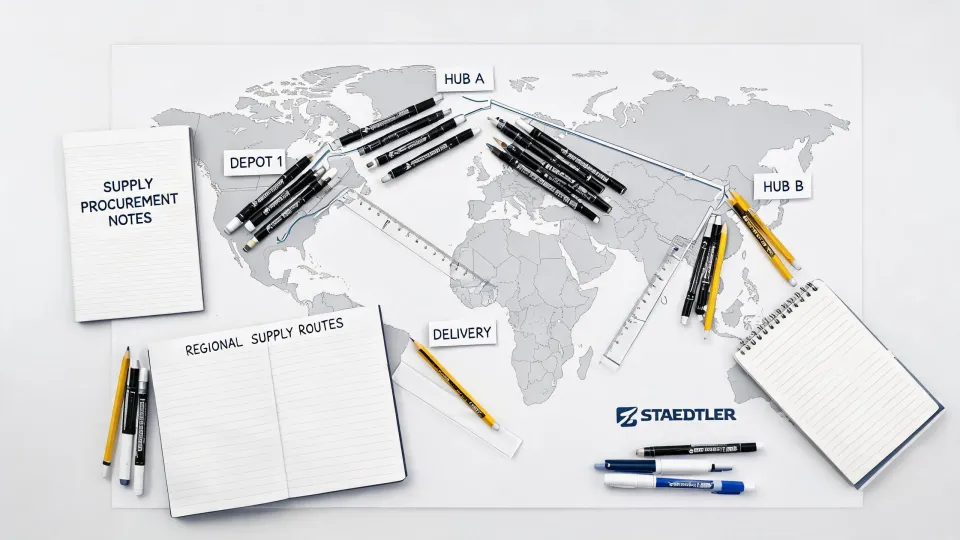
Industry mapping is not cosmetic. It decides how the same category behaves in a purchasing file. A fineliner pen in a design studio is a precision drawing tool. In a school, it may be part of an art curriculum. In an office, it may be a meeting note or color-coding tool. In retail, it is a shelf-facing product with packaging and assortment logic. Treating those settings as interchangeable creates bloated quotes, unclear substitutions, and preventable reorder friction.
Staedtler programs keep the environment visible from the first conversation. We ask who owns the budget, how frequently the product is consumed, which documentation is required, and whether pack presentation or individual use matters more. That lets a district, distributor, studio, or corporate buyer compare options without rebuilding the category from scratch. It also helps avoid unsupported wording around safety, sustainability, or performance by tying documentation to the actual product range and market.
The map-based structure is useful for global buyers because local distribution rules, school calendars, retail seasons, and approval paths vary. A disciplined category architecture gives each region room to adapt while preserving a common product logic.
We will shape the assortment around education, design, office, or retail constraints and keep the quote format practical.