Approved list cleanup
Remove duplicate pen, pencil, and marker lines that serve the same role, then document the reason each remaining family stays.
Staedtler buyers can compare packaging, material notes, reorder waste, and documentation needs without relying on broad environmental slogans.
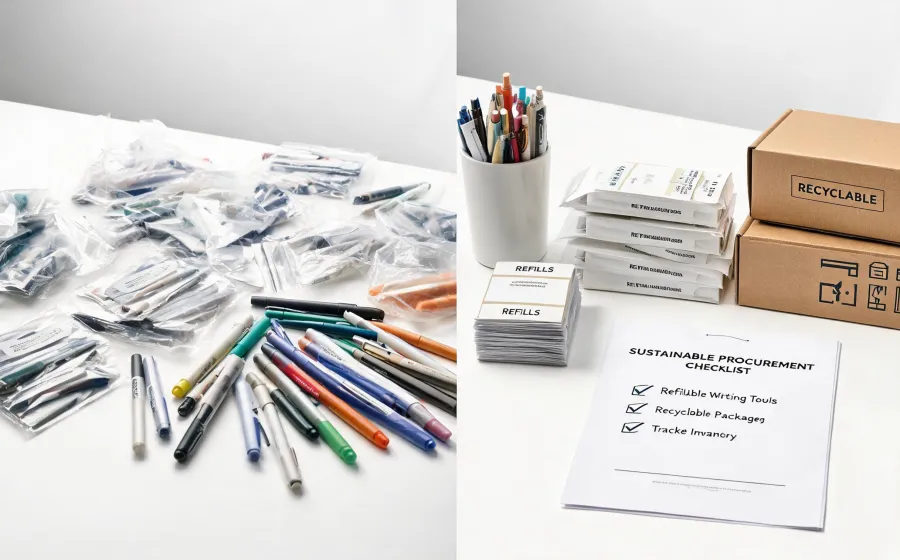
Many office and education buyers want more responsible supply programs, but the most credible starting point is ordinary data: which SKUs are duplicated, which products are over-ordered, which packaging formats create storage issues, and which product documentation is actually available. A cleaner approved list can reduce avoidable replenishment, simplify distributor substitutions, and make sustainability review easier to defend.
We avoid unsupported absolute phrases. Product-specific documentation, chain-of-custody evidence, recycled-content notes, and market-specific standards should be attached to the relevant range only when available. That helps procurement, legal, education, and facilities teams review claims without turning a stationery purchase into an evidence hunt.
Remove duplicate pen, pencil, and marker lines that serve the same role, then document the reason each remaining family stays.
Compare individual, class pack, studio pack, and retail display formats against actual consumption and storage constraints.
Keep material notes, applicable standards, and sourcing records attached to the precise product family instead of the whole brand.
The sustainability conversation for office and education products is often most useful when it is modest. Buyers need to know whether a claim applies to a specific paper product, a writing instrument family, a packaging format, or a distribution program. They also need to know the boundary of the claim: region, material, reporting year, or certification scope. This page is built around that discipline. It does not promise a universal environmental outcome. It gives purchasing teams a way to ask better questions and collect cleaner records.
For schools, that may mean separating classroom kits from art media and tracking pack quantities by semester. For corporate offices, it may mean narrowing shared writing tools and whiteboard markers to reduce unused stock. For creative studios, it may mean documenting pigment, clay, or drawing products by range so replacement decisions are consistent. For retail distributors, it may mean keeping seasonal display choices aligned with actual sell-through rather than repeating old assortments by habit.
Credible progress is built from repeatable buying behavior. When the program is organized, sustainability review becomes a normal procurement step instead of a last-minute marketing statement.
We will help separate measurable product data from wording that needs more evidence.